

In recent decades, plastic pollution has emerged as one of the most pressing environmental challenges facing our planet. As the world grapples with the consequences of plastic waste, understanding how polymers are made and why they persist in the environment is crucial.
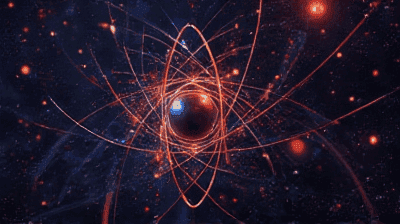
The universe is a vast and mysterious place, filled with countless wonders that spark our curiosity and ignite our imaginations. Among these wonders, perhaps none is as enigmatic and fascinating as the Higgs boson, often referred to as the "God particle." This intriguing particle plays a crucial role in our understanding of the universe, particularly when it comes to the concept of mass. But what exactly is the Higgs boson, and why is it so important?

From the dazzling displays of fireworks lighting up the night sky to the powerful roar of car engines propelling vehicles forward, the concepts of explosions and combustion are fundamental to our understanding of chemistry and energy. Both phenomena involve rapid reactions that release energy, but they differ significantly in their mechanisms and effects.

Climate change is one of the most pressing issues facing humanity today, with significant implications for both the environment and society. As global temperatures rise, the effects of climate change become increasingly evident, particularly in polar regions where ice is melting at an alarming rate. One of the critical aspects of this phenomenon is the feedback loops that amplify the initial warming, making the situation worse over time.

The quest to explore the universe beyond our own solar system has captivated humanity for centuries. With the advancement of technology and astronomical techniques, scientists have made remarkable strides in their search for exoplanets—planets orbiting stars outside our solar system. The discovery of these alien worlds not only deepens our understanding of the cosmos but also raises profound questions about the potential for life beyond Earth.